
 by
Being told that you have a kidney tumor can be an emotional and uncertain experience. One of the first questions most patients ask is:
“Will I need surgery?”
In many cases, surgery remains the most effective treatment for kidney tumors, especially when cancer is confined to the kidney. Fortunately, advances in surgical techniques have made kidney cancer surgery safer, more precise, and associated with faster recovery than ever before.
Understanding the surgical journey—from diagnosis to recovery—can help reduce anxiety and prepare patients for what lies ahead.
If you’re considering kidney cancer surgery in Mumbai, here’s what you should know before treatment begins.
Why Surgery Is Often Recommended for Kidney Tumors
Not every kidney tumor is cancerous, but when imaging suggests a suspicious mass, surgery is often the preferred treatment.
The goal of surgery is to:
- Remove the tumor completely
- Preserve as much healthy kidney tissue as possible
- Prevent the cancer from spreading
- Improve long-term outcomes
For many patients, surgery offers the best chance of long-term disease control.
How Doctors Decide Whether Surgery Is Needed
Before recommending surgery, specialists evaluate several factors:
Tumor Size
Smaller tumors may be suitable for kidney-sparing procedures.
Tumor Location
The position of the tumor within the kidney can influence the type of surgery required.
Overall Kidney Function
Preserving kidney function is an important consideration during treatment planning.
Patient Health
Age, medical history, and existing health conditions also play a role.
This is why every treatment plan is personalized rather than following a one-size-fits-all approach.
Types of Kidney Tumor Surgery
There are two primary surgical approaches used for kidney tumors.
Partial Nephrectomy (Kidney-Sparing Surgery)
In this procedure, only the tumor and a small margin of surrounding tissue are removed.
The remaining healthy kidney tissue is preserved.
When Is It Recommended?
- Small kidney tumors
- Early-stage kidney cancer
- Patients where preserving kidney function is important
Advantages
- Maintains kidney function
- Effective cancer control
- Lower risk of long-term kidney problems
Today, many patients undergoing kidney cancer surgery in Mumbai are candidates for partial nephrectomy.
Radical Nephrectomy
A radical nephrectomy involves removing the entire kidney.
When Is It Needed?
- Large tumors
- Complex tumor locations
- Advanced disease involving significant portions of the kidney
Even with one kidney, most patients can continue to live healthy and active lives.
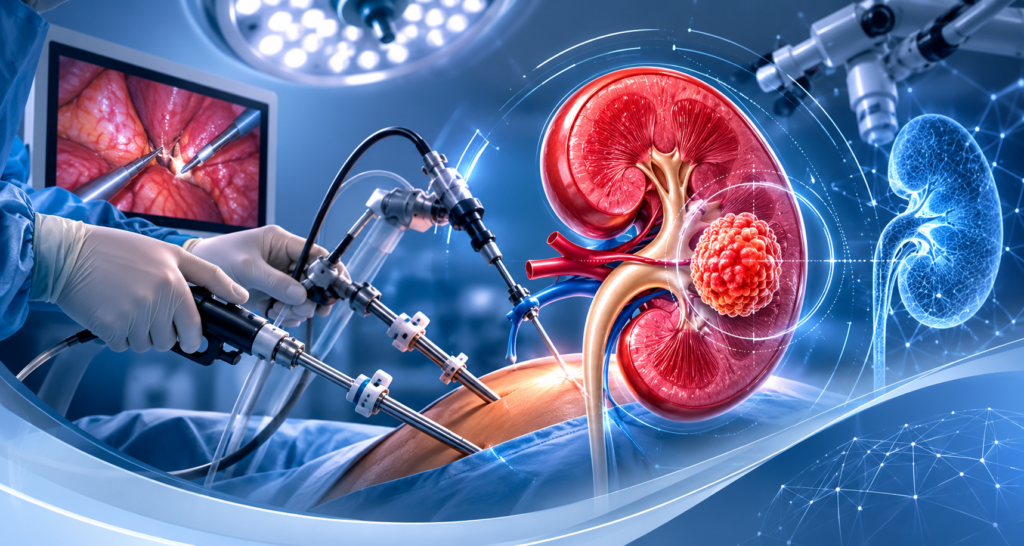
Modern Surgical Techniques
One of the biggest changes in kidney cancer treatment has been the move toward minimally invasive surgery.
Laparoscopic Surgery
This technique uses small incisions and specialized instruments to remove kidney tumors.
Benefits may include:
- Smaller scars
- Less pain
- Faster recovery
Robotic-Assisted Surgery
Robotic surgery has become increasingly popular in kidney cancer treatment.
The surgeon controls robotic instruments that provide:
- Enhanced precision
- Magnified 3D visualization
- Improved maneuverability
Benefits of Robotic Surgery
- Reduced blood loss
- Smaller incisions
- Faster recovery
- Shorter hospital stay
Many advanced centers offering kidney cancer treatment in Mumbai now utilize robotic-assisted techniques for suitable patients.
Preparing for Kidney Tumor Surgery
Proper preparation helps ensure a smoother procedure and recovery.
Patients may undergo:
Blood Tests
To evaluate kidney function and overall health.
Imaging Studies
CT scans or MRI help surgeons plan the procedure.
Medical Clearance
Patients with other medical conditions may require additional assessments before surgery.
What Happens on the Day of Surgery?
Most kidney tumor surgeries are performed under general anesthesia.
The surgical team will:
- Review your medical history
- Confirm the treatment plan
- Prepare you for anesthesia
- Perform the procedure
The duration of surgery depends on factors such as tumor size, complexity, and surgical approach.
Immediately After Surgery
Following surgery, patients are closely monitored in the recovery area.
Common experiences include:
- Mild discomfort
- Temporary fatigue
- Monitoring of urine output
- Gradual return to oral fluids
Pain management protocols help keep patients comfortable during recovery.
Hospital Stay and Recovery Timeline
Recovery varies depending on the type of surgery performed.
After Minimally Invasive Surgery
Many patients:
- Walk within 24 hours
- Return home within a few days
- Resume light activities relatively quickly
After More Complex Procedures
Recovery may take longer and require additional monitoring.
Life After Kidney Surgery
One concern many patients have is whether life will change significantly after surgery.
For most individuals:
- Daily activities can return to normal
- Exercise can be resumed gradually
- Quality of life remains excellent
Even patients who undergo complete kidney removal often adapt well, provided the remaining kidney functions normally.
Follow-Up After Surgery
Surgery is only one part of the treatment journey.
Regular follow-up appointments help doctors:
- Monitor recovery
- Detect recurrence early
- Assess kidney function
Follow-up plans may include:
- Imaging scans
- Blood tests
- Physical examinations
These visits are an important part of long-term care.
When Additional Treatment May Be Needed
While surgery alone is sufficient for many patients, some individuals may require additional treatment.
This depends on:
- Tumor type
- Cancer stage
- Pathology findings
Additional therapies may include:
- Targeted therapy
- Immunotherapy
- Ongoing surveillance
Your treatment team will guide these decisions based on individual circumstances.
The Importance of Choosing the Right Specialist
Kidney tumor surgery requires a combination of surgical expertise, cancer knowledge, and careful treatment planning.
Patients often seek treatment from Dr. Varun Agarwal, who specializes in advanced urological cancer care.
As an experienced uro oncologist in Mumbai, he focuses on:
- Accurate diagnosis and staging
- Kidney-preserving surgical techniques when possible
- Minimally invasive and robotic surgery
- Personalized treatment planning
For patients exploring kidney cancer treatment in Mumbai, specialist care plays an important role in achieving optimal outcomes.
Common Patient Concerns
Will I Lose My Entire Kidney?
Not necessarily.
Many patients can undergo partial nephrectomy, which preserves healthy kidney tissue.
Is Kidney Tumor Surgery Safe?
Modern surgical techniques have significantly improved safety and recovery outcomes.
How Long Before I Return to Work?
Recovery varies, but many patients return to office-based work within a few weeks, depending on the procedure and individual healing.
Can Kidney Cancer Return After Surgery?
Recurrence is possible, which is why regular follow-up appointments remain important.
Frequently Asked Questions (FAQs)
What is the best surgery for a kidney tumor?
The best procedure depends on tumor size, location, and stage. Partial nephrectomy is often preferred when feasible because it preserves kidney function.
How long does kidney tumor surgery take?
The duration varies depending on the complexity of the procedure but typically ranges from a few hours.
Is robotic surgery better than traditional surgery?
Robotic surgery offers advantages such as smaller incisions, enhanced precision, reduced blood loss, and faster recovery for suitable patients.
Can I live a normal life with one kidney?
Yes. Most people can live healthy, active lives with one functioning kidney.
When should I consult a uro-oncologist?
If you have a kidney mass, abnormal imaging findings, blood in urine, or a confirmed diagnosis of kidney cancer, specialist evaluation is recommended.
Final Thoughts
Kidney tumor surgery remains one of the most effective treatments for localized kidney cancer. Advances in minimally invasive and robotic techniques have made treatment safer, more precise, and associated with faster recovery.
Knowing what to expect before, during, and after surgery can help patients feel more prepared and confident throughout the process.
If you are considering kidney cancer surgery in Mumbai, consulting an experienced specialist such as Dr. Varun Agarwal, a trusted uro oncologist in Mumbai, can help you understand your options and choose the most appropriate treatment plan for your condition.