 by
Introduction
A prostate cancer diagnosis can feel overwhelming, but early detection can change the entire treatment journey. Many prostate cancers grow slowly and may not show warning signs in the beginning, which makes timely screening and medical evaluation important.
With advancements in urology, treatments have become more precise and patient-focused. Robotic prostatectomy is one such approach that helps surgeons remove the cancerous prostate with enhanced control.
This blog explains how prostate cancer develops, why early diagnosis matters, how robotic prostatectomy works, and what patients should know before choosing treatment.
What Is Prostate Cancer and Why Does Early Detection Matter?
The prostate is a small gland located below the bladder in men. It plays a role in producing fluid that supports sperm function.
Prostate cancer occurs when abnormal cells inside the prostate start growing uncontrollably. In some men, these cancer cells grow slowly and remain limited to the prostate. In others, they may become aggressive and spread to nearby tissues, lymph nodes, or other parts of the body.
The challenge is that early prostate cancer often does not cause noticeable symptoms.
A man may feel completely healthy while cancer is developing inside the prostate.
This is why regular discussions with a doctor become important, especially after the age of 50 or earlier if there is a family history of prostate cancer.
Early detection can help doctors identify:
- Whether cancer is limited to the prostate
- How aggressive the cancer appears
- Which treatment options may provide the best outcome
Finding prostate cancer before it spreads gives patients more treatment choices, including surgery with curative intent.
Common Signs That Should Not Be Ignored
Early prostate cancer may not create symptoms. When symptoms appear, they can sometimes look similar to common urinary problems caused by an enlarged prostate.
Possible signs include:
- Difficulty starting urine flow
- Weak urine stream
- Frequent urination, especially at night
- Blood in urine or semen
- Pain while urinating
- Erectile difficulties
- Persistent pain in the back, hips, or pelvis
These symptoms do not always mean cancer. Conditions like benign prostate enlargement can cause similar complaints.
The important question is not “Is this normal with age?”
The better question is “Has my prostate health been checked properly?”
A consultation with a specialist can help identify the actual cause.
How Is Prostate Cancer Diagnosed?
A prostate cancer evaluation usually involves multiple steps. Doctors combine test results with your age, symptoms, family history, and overall health before suggesting treatment.
PSA Blood Test
The Prostate-Specific Antigen (PSA) test measures PSA levels in the blood.
A raised PSA level may occur due to prostate cancer, prostate enlargement, or inflammation. Doctors use PSA values along with other findings to decide whether further evaluation is needed.
Digital Rectal Examination (DRE)
A Digital Rectal Examination allows the doctor to assess the prostate for changes in size, firmness, or irregularity.
Many men feel anxious about this examination, but it is a quick clinical assessment that provides useful information.
MRI and Prostate Biopsy
A prostate MRI helps identify suspicious areas inside the prostate. If required, a biopsy is performed to examine prostate tissue under a microscope.
The biopsy report helps determine the cancer grade, including the Gleason score, which indicates how aggressive the cancer cells look.
Robotic Prostatectomy: A Precise Treatment Option for Localised Prostate Cancer
For men whose cancer is confined to the prostate, surgery may be recommended as a treatment option.
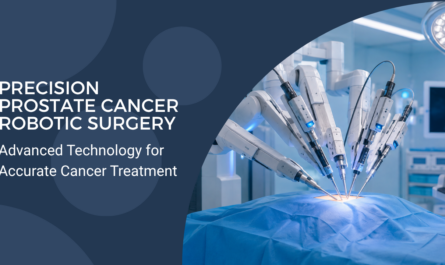
Robotic prostatectomy is a minimally invasive procedure where surgeons remove the prostate gland using robotic-assisted instruments.
The surgeon controls the robotic system from a console. The technology provides magnified 3D visualisation and allows precise movements around delicate structures.
The main goals of robotic prostatectomy are:
- Remove cancer completely
- Preserve surrounding healthy structures when possible
- Support faster recovery
- Reduce surgical impact
Compared with traditional open surgery, robotic techniques usually involve smaller incisions and less blood loss.
The suitability of robotic surgery depends on factors such as cancer stage, PSA level, Gleason score, prostate anatomy, and overall health.

Understanding Recovery After Robotic Prostatectomy
Patients often have two major concerns after prostate cancer surgery:
“Will I control my urine normally again?”
“Will my sexual function be affected?”
These concerns are common and should be discussed openly with your surgeon.
Recovery varies from person to person. Factors that influence recovery include:
- Age
- Existing health conditions
- Cancer characteristics
- Nerve preservation during surgery
- Rehabilitation after surgery
Many patients gradually improve with proper follow-up care, pelvic floor exercises, and regular monitoring.
After surgery, PSA monitoring becomes an important part of follow-up. Your doctor checks PSA levels regularly to assess treatment response.
Choosing an Experienced Uro-Oncology Team Matters
Prostate cancer treatment requires careful decision-making. Every patient has a different situation, and the right treatment depends on detailed evaluation.
A specialised Uro-Oncologist in Mumbai can help patients understand:
- Whether surgery is required
- Whether robotic prostatectomy is suitable
- Expected recovery timeline
- Possible risks and benefits
Doctors experienced in Uro Oncology Robotic Surgery in Mumbai use advanced surgical techniques to manage complex prostate cancer cases.
Specialists such as Dr. Varun V. Agarwal focus on providing personalised evaluation and treatment planning for patients with urological cancers.
Before deciding on treatment, patients should discuss their reports, treatment goals, and concerns with their healthcare team.
Why Early Action Can Make a Difference
Many men delay prostate evaluation because they do not have symptoms or assume urinary changes are only related to ageing.
Waiting for symptoms can sometimes mean missing the opportunity to detect cancer at an earlier stage.
Simple steps can help:
- Discuss prostate screening with your doctor
- Understand your PSA results
- Maintain records of family medical history
- Seek specialist advice if reports show concerns
For patients looking for Prostate Cancer treatment in Mumbai, an early consultation can help create a clear treatment plan based on their individual condition.
Frequently Asked Questions About Prostate Cancer and Robotic Prostatectomy
1. Can prostate cancer be cured if detected early?
Yes, many prostate cancers detected at an early stage can be treated successfully. The outcome depends on factors such as cancer stage, grade, and overall health.
2. Does prostate cancer always cause urinary symptoms?
No. Early prostate cancer often does not cause noticeable symptoms. This is why screening and timely medical evaluation are important.
3. Is robotic prostatectomy safe?
Robotic prostatectomy is considered a commonly used surgical approach for suitable prostate cancer patients. The risks and benefits depend on individual health factors and surgical assessment.
4. How long does recovery take after robotic prostate surgery?
Recovery differs between patients. Many people gradually return to routine activities within weeks, while complete functional recovery may take longer.
5. Can prostate cancer return after surgery?
Some patients may experience recurrence after treatment. Regular PSA monitoring helps doctors identify changes early and plan further management if required.
6. Who should I consult for prostate cancer treatment?
A uro-oncologist is trained to diagnose and treat cancers affecting the urinary system and male reproductive organs. Consulting a specialist helps patients understand suitable treatment options.
Conclusion
Prostate cancer does not always announce its presence through symptoms. Regular evaluation, awareness of risk factors, and timely medical advice can help detect the disease at an earlier stage.
Robotic prostatectomy has changed prostate cancer surgery by offering surgeons greater precision while helping many patients recover with fewer surgical challenges. The right treatment depends on your cancer stage, health condition, and personal goals.
If you notice urinary changes, have an abnormal PSA report, or are concerned about prostate health, consult an experienced specialist. Early evaluation can help you understand your options and take the next step with confidence.