
 by
About 1 in 8 men will be diagnosed with prostate cancer during their lifetime. The good news is that when prostate cancer is detected early, treatment outcomes are often very positive.
The challenge is that early prostate cancer usually does not cause noticeable symptoms. Many men feel completely healthy while changes are developing in the prostate.
Knowing when to begin screening, understanding PSA test results, and recognizing your personal risk factors can help you take timely action. This guide explains the right age for prostate cancer screening, available tests, and when you should seek expert advice from a specialist.
What Is Prostate Cancer Screening?
Prostate cancer screening involves tests that help identify possible changes in the prostate before symptoms appear. Screening does not diagnose cancer directly but helps doctors decide whether further evaluation is needed.
The two main screening methods are:
PSA Blood Test
The prostate-specific antigen (PSA) test is a blood test that measures PSA levels in nanograms per millilitre (ng/mL).
PSA is produced by the prostate gland. A higher PSA level can occur due to prostate cancer, but it can also happen because of non-cancerous conditions such as prostate enlargement or infection.
A PSA result is interpreted based on:
• Your age
• Family history
• Previous PSA levels
• Prostate size
• Other medical conditions
A single elevated PSA value does not always mean cancer. Doctors often look at changes in PSA levels over time to understand the risk better.
Digital Rectal Examination (DRE)
A digital rectal examination allows a doctor to physically examine the prostate for unusual changes such as hard areas, lumps, or irregularities.
The examination usually takes only a few seconds and helps provide additional information along with PSA results.
Many men feel nervous about this test, but it is a routine part of prostate health evaluation when required.
When Should You Start Prostate Cancer Screening?
The right time for screening depends on your risk profile. There is no single age that applies to every man.
A simple screening timeline can help you understand when to begin discussions.
Age 40: Consider Earlier Screening If You Have High Risk
Men may need earlier screening discussions around age 40 if they have:
• A father, brother, or son diagnosed with prostate cancer
• Multiple family members with prostate or related cancers
• Known genetic mutations linked with cancer risk
Inherited gene changes such as BRCA1, BRCA2, and Lynch syndrome can increase the possibility of developing prostate cancer.
Age 45: Screening for Higher-Risk Groups
Men with increased risk factors should consider screening around age 45.
This includes:
• Men with a strong family history of prostate cancer
• Men of African ancestry, who have a higher risk of developing prostate cancer and may experience more aggressive disease
• Men with inherited genetic risk factors
Starting screening earlier allows doctors to monitor prostate health before major changes occur.
Age 50: Average-Risk Men Should Discuss Screening
Men with average risk and no major family history can usually discuss prostate cancer screening around age 50.
Your doctor may recommend PSA testing based on your overall health, life expectancy, and personal preferences.
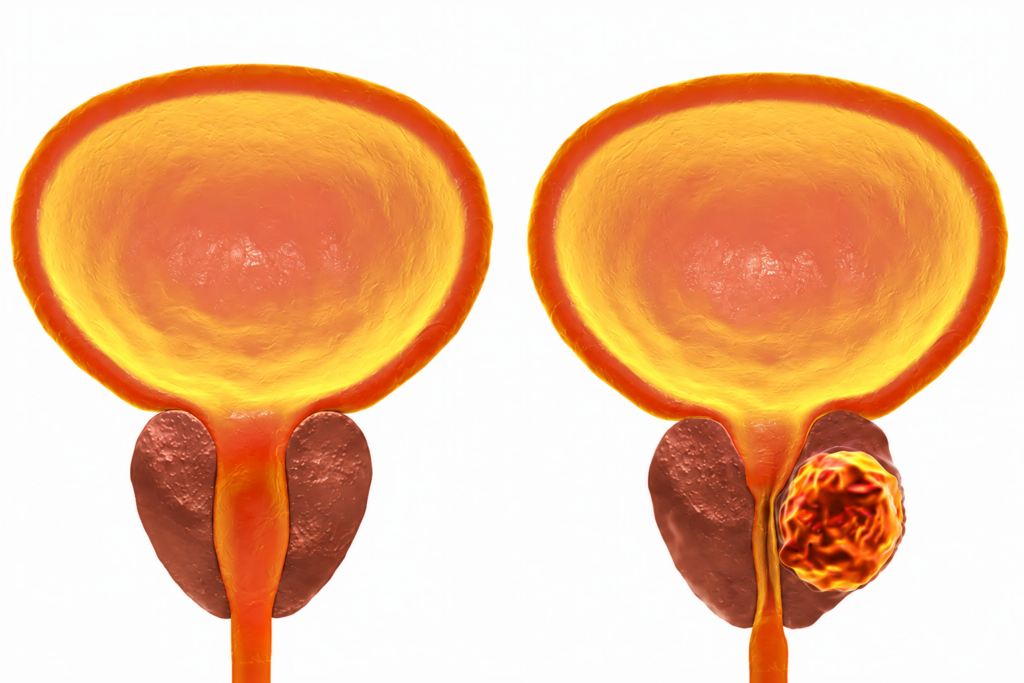
Why Is Early Prostate Cancer Screening Important?
Prostate cancer is often called a silent disease because early stages usually do not cause symptoms.
A man may have early prostate cancer without:
• Pain
• Urinary problems
• Changes in sexual function
• Any noticeable health changes
Waiting until symptoms appear may mean the disease has already progressed.
Screening helps identify prostate cancer at a stage when treatment options are wider. Early diagnosis can help doctors plan treatment based on the cancer grade, stage, and individual health needs.
For men looking for expert evaluation, a qualified Uro-Oncologist in Mumbai can provide guidance on screening, diagnosis, and personalised treatment planning.
Does Every Urinary Problem Mean Prostate Cancer?
Many men worry that urinary changes automatically indicate prostate cancer. This is not always true.
As men age, the prostate can naturally enlarge. This condition is called Benign Prostatic Hyperplasia (BPH).
BPH can cause symptoms such as:
• Frequent urination, especially at night
• Weak urine flow
• Difficulty starting urination
• Feeling that the bladder has not emptied completely
These symptoms are common and are often related to prostate enlargement rather than cancer.
Still, any new or persistent urinary changes should be evaluated because prostate conditions can have similar symptoms.
What Happens If Your PSA Level Is High?
A high PSA level does not confirm prostate cancer. Your doctor may recommend additional evaluation to understand the reason behind the increase.
Depending on your situation, further tests may include:
Repeat PSA Testing
PSA levels can temporarily increase due to:
• Urinary infection
• Prostate inflammation
• Recent medical procedures
• Certain activities that irritate the prostate
Repeating the test after a suitable interval can help confirm whether the rise is persistent.
Free PSA Test
The free PSA test measures the amount of PSA that is not attached to proteins in the blood.
This information can help doctors estimate whether a raised PSA level is more likely due to cancer or a non-cancerous condition.
Multiparametric MRI and MRI-Guided Biopsy
Modern prostate evaluation may include multiparametric MRI, which creates detailed images of the prostate.
If imaging shows suspicious areas, doctors may recommend an MRI-guided biopsy to collect tissue samples for accurate diagnosis.
A biopsy remains the test that confirms whether cancer cells are present.
Who Has a Higher Risk of Prostate Cancer?
Your chances of developing prostate cancer may increase due to certain factors.
Age
Risk increases as men get older, especially after 50.
Family History
Having a close relative with prostate cancer can increase your risk.
Genetic Factors
Inherited changes in genes such as BRCA2 can increase the likelihood of developing prostate cancer.
Ethnicity
Some ethnic groups have a higher risk and may benefit from earlier screening discussions.
Understanding your risk factors helps create a screening plan that fits your health needs.
Prostate Cancer Treatment Options After Diagnosis
If prostate cancer is detected, treatment depends on several factors, including cancer stage, tumour characteristics, age, and overall health.
Treatment options may include:
• Active surveillance for low-risk cancers
• Surgery to remove the prostate
• Radiation therapy
• Hormone therapy
• Advanced systemic treatments for advanced disease
Choosing the right treatment requires careful evaluation by an experienced specialist.
Patients seeking Prostate Cancer Treatment in Mumbai can benefit from a multidisciplinary approach where diagnosis, staging, and treatment planning are discussed together.
Frequently Asked Questions
1. Can prostate cancer occur without symptoms?
Yes. Early prostate cancer often does not cause symptoms. This is why screening is important, especially for men with increased risk factors.
2. Is a PSA test painful?
No. A PSA test is a simple blood test and involves only a small blood sample.
3. Does a digital rectal examination hurt?
A DRE may feel uncomfortable, but it is usually quick and does not cause significant pain.
4. Can sexual activity affect PSA levels?
Yes. Ejaculation shortly before a PSA test may temporarily increase PSA levels in some men. Your doctor may advise avoiding certain activities before testing.
5. Does cycling affect PSA results?
Long or intense cycling may influence PSA levels in some men. If you cycle regularly, mention it before your PSA test.
6. Does a high PSA level always mean cancer?
No. PSA can increase due to prostate enlargement, infection, or inflammation. Further evaluation is needed to identify the cause.
7. Can prostate cancer be cured if detected early?
Many early-stage prostate cancers can be successfully treated. Outcomes depend on factors such as cancer stage, tumour characteristics, and treatment approach.
Conclusion
Prostate cancer screening helps detect changes before serious symptoms develop. The right time to begin screening depends on your age, family history, genetic risk, and overall health. Regular prostate health discussions can help identify concerns early and guide appropriate care. If you have risk factors, urinary changes, or questions about screening, consult an experienced specialist such as Dr. Varun V. Agarwal for personalised evaluation and treatment guidance. Taking timely steps can make a significant difference in managing prostate health.