
 by
Introduction
If you have been diagnosed with a kidney tumor, one of your biggest concerns may be, “Will I lose my kidney?” The answer depends on several factors, including the size, location, and nature of the tumor. Modern Kidney Cancer Treatment focuses on removing cancer while protecting as much healthy kidney function as possible. Understanding the difference between partial and radical nephrectomy can help you have a more informed discussion with your doctor about the right surgical approach.
Partial vs Radical Nephrectomy: Understanding Your Options
A nephrectomy is a surgery performed to remove kidney cancer. The two main approaches are partial nephrectomy and radical nephrectomy.
The choice is not simply about removing a smaller or larger portion of the kidney. It is about finding the safest balance between complete cancer removal and preserving your long-term health.
A kidney cancer specialist evaluates:
- Tumor size and location
- Cancer stage
- Kidney function
- Your age and overall health
- Risk factors such as diabetes or high blood pressure
A Uro-Oncologist in Mumbai will carefully review your scans and health reports before recommending the most suitable procedure.
Partial Nephrectomy: Removing the Tumor While Saving the Kidney
Partial nephrectomy is also called kidney-sparing surgery or nephron-sparing surgery.
During this procedure, the surgeon removes only the cancerous part of the kidney along with a small margin of healthy tissue. The remaining kidney continues to function.
This approach is often considered when:
- The tumor is small or located in an accessible area
- The cancer is limited to one part of the kidney
- Preserving kidney function is important
- The patient has a higher risk of future kidney problems
For example, a person with a small kidney tumor discovered during a routine scan may be able to remove the tumor while keeping most of the kidney intact.
The biggest advantage of partial nephrectomy is kidney preservation. Maintaining more healthy kidney tissue can lower the chances of developing long-term kidney problems.
Radical Nephrectomy: When Removing the Entire Kidney Is Needed
Radical nephrectomy involves removing the entire kidney along with nearby tissues that may be affected by cancer.
Doctors may recommend this option when:
- The tumor is large
- The tumor involves important kidney structures
- Removing only the tumor may leave behind cancer
- Partial surgery may create a higher surgical risk
Many patients live healthy lives with one kidney. A healthy remaining kidney can usually perform the necessary functions.
The decision for radical nephrectomy does not mean treatment has failed. In some cases, removing the entire kidney provides better cancer control and long-term outcomes.
Partial vs Radical Nephrectomy: A Patient-Focused Comparison
| Factor | Partial Nephrectomy | Radical Nephrectomy |
| Kidney tissue removed | Only tumor and a small surrounding margin | Entire kidney |
| Main goal | Remove cancer while preserving kidney function | Complete removal of affected kidney |
| Common use | Smaller or suitable tumors | Larger or complex tumors |
| Impact on kidney function | More kidney tissue preserved | Remaining kidney handles full function |
| Surgical complexity | More technically demanding | Usually less complex |
| Long-term focus | Protect kidney health | Achieve complete cancer removal when needed |
Your doctor does not choose surgery only based on tumor size. A small tumor in a difficult location may sometimes require a different approach than a larger tumor in an easier location.
How Doctors Decide Which Surgery Is Right for You
Every kidney cancer case is different. Two patients with similar tumor sizes may receive different recommendations because their health conditions and tumor locations are not the same.
Tumor Location Matters
The position of the tumor inside the kidney affects whether partial nephrectomy is possible.
A tumor located away from major blood vessels and important kidney structures may be easier to remove while saving healthy tissue.
A tumor growing near critical areas may require radical nephrectomy for safer cancer removal.
Kidney Function Plays an Important Role
Before surgery, doctors evaluate your kidney function using tests such as eGFR.
This measurement shows how well your kidneys filter waste from your blood.
Patients with:
- Reduced kidney function
- Diabetes
- High blood pressure
- Previous kidney problems
may benefit from preserving as much kidney tissue as possible whenever it is safely possible.
Cancer Control Remains the Priority
While preserving kidney function is important, completely treating cancer remains the main goal.
The best surgical choice is the one that removes the cancer effectively while considering your future health.
Addressing Common Patient Concerns: Kidney Loss, Dialysis, and Recurrence
Many patients fear two things after hearing about kidney surgery:
“Will I need dialysis?”
“Can cancer come back?”
These concerns are understandable.
Most people with one healthy kidney do not need dialysis. The remaining kidney can often maintain normal body functions.
The risk of future kidney problems depends on factors such as your kidney health before surgery, lifestyle, medical conditions, and follow-up care.
Cancer recurrence depends on several factors, including:
- Cancer stage
- Tumor characteristics
- Surgical results
Regular follow-up appointments and imaging help detect any changes early.
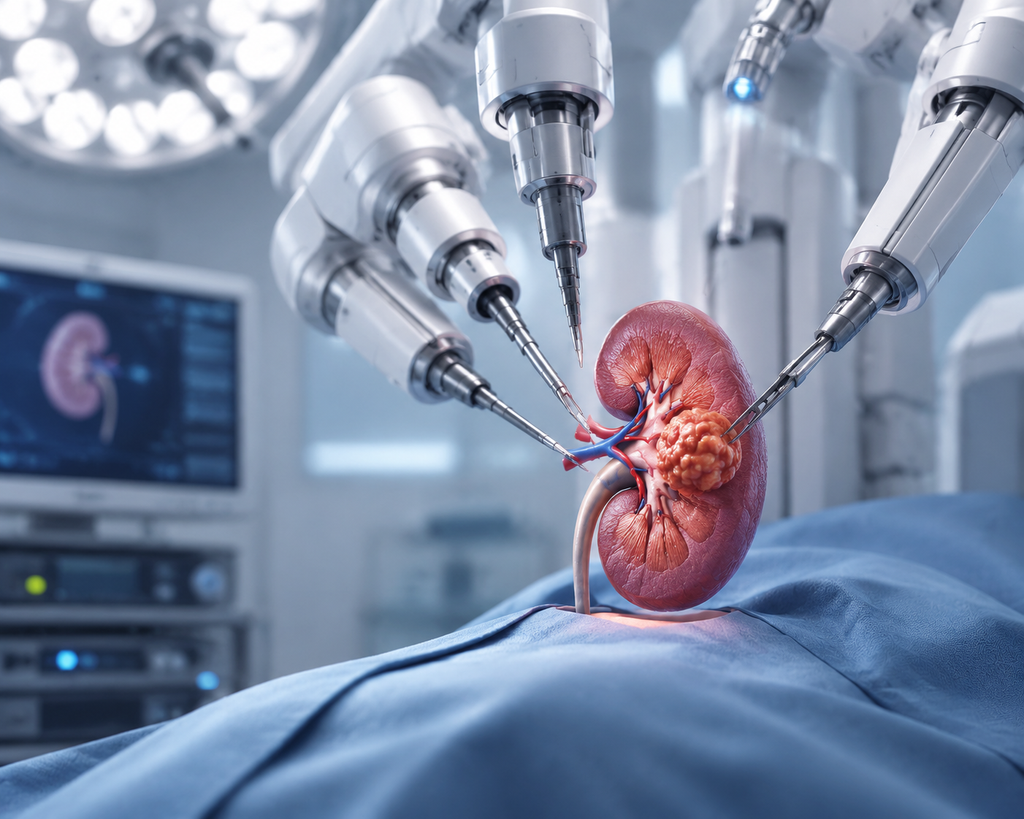
Role of Robotic Surgery in Kidney Cancer Treatment
Technology has changed the way many kidney cancer surgeries are performed.
Robotic surgery allows surgeons to perform precise movements through small incisions. It can be especially useful for complex partial nephrectomy procedures where the goal is to remove the tumor while protecting healthy kidney tissue.
Uro Oncology Robotic Surgery in Mumbai has become an important option for selected patients because it combines advanced surgical techniques with careful cancer management.
Specialists such as Dr. Varun V. Agarwal use detailed evaluation and advanced surgical approaches to help patients understand whether robotic kidney surgery is suitable for their condition.
Questions You Should Ask Your Urologist Before Surgery
Do not hesitate to ask detailed questions before making your treatment decision.
Consider asking:
- “Is a nephron-sparing partial nephrectomy technically possible for my tumor location?”
- “What is my current eGFR level, and how could each surgery affect my kidney function?”
- “How much healthy kidney tissue can be preserved with partial nephrectomy?”
- “What factors make you recommend radical nephrectomy instead?”
- “If partial nephrectomy becomes difficult during surgery, what is the possibility of converting to radical nephrectomy?”
- “What follow-up plan will I need after surgery?”
These questions can help you understand the reasoning behind your treatment plan.
FAQs About Partial and Radical Nephrectomy
1. Is partial nephrectomy always better than radical nephrectomy?
No. Partial nephrectomy is preferred when it can safely remove cancer while preserving kidney function. Radical nephrectomy may be the better choice for larger or complex tumors.
2. Can kidney cancer be cured with surgery?
For many patients with kidney cancer limited to the kidney, surgery can be an effective treatment option. Outcomes depend on cancer stage and other medical factors.
3. Will I have kidney problems after radical nephrectomy?
Many people maintain normal health with one kidney. Your remaining kidney function and overall health determine your long-term risk.
4. How long does recovery take after kidney surgery?
Recovery depends on the type of surgery, surgical technique, and your health condition. Minimally invasive procedures may allow faster recovery for suitable patients.
5. Is robotic kidney surgery safe?
Robotic surgery can be a suitable option for selected patients when performed by experienced surgeons. Your doctor will decide if it fits your specific case.
Conclusion
Choosing between partial and radical nephrectomy is an important decision that depends on your cancer details, kidney function, and overall health. The goal of modern Kidney Cancer Treatment is not only to remove cancer but also to protect your quality of life after surgery. A detailed discussion with an experienced Uro-Oncologist in Mumbai can help you understand your options and make the right choice for your situation. With advances such as Uro Oncology Robotic Surgery in Mumbai, many patients now have access to precise treatment approaches designed around their individual needs.