
 by
Many patients feel anxious when they hear the word “tumor,” often assuming it automatically means cancer. However, not all kidney tumors are cancerous. Understanding the difference between a kidney tumor and kidney cancer is essential for making informed decisions about diagnosis and treatment.
If you or a loved one has been diagnosed with a kidney mass, knowing whether it is benign or malignant can help guide the next steps. This article explains the key differences, symptoms, causes, and treatment options in a simple and clear manner.
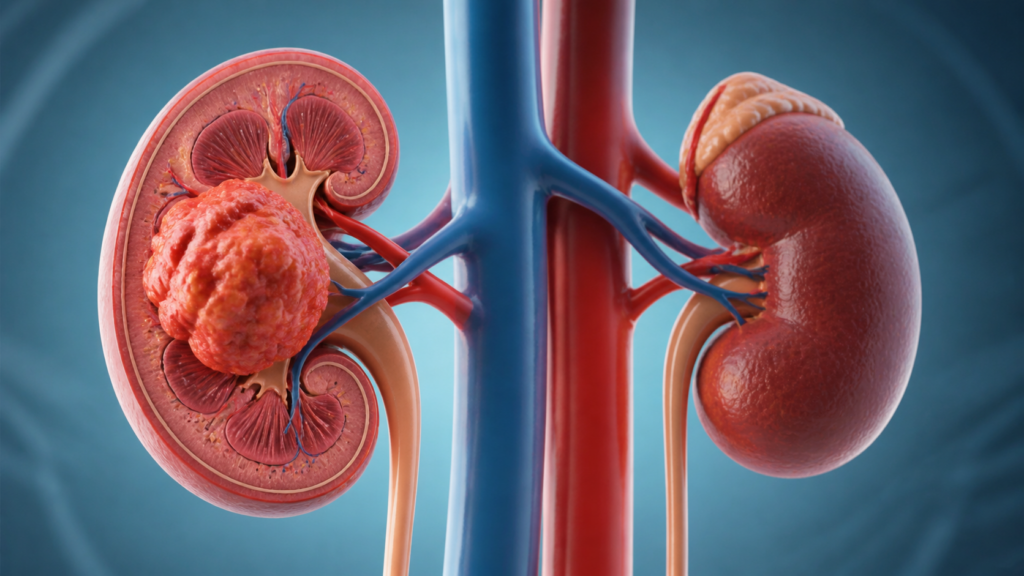
What Is a Kidney Tumor?
A kidney tumor refers to any abnormal growth or mass in the kidney. Tumors can be either benign (non-cancerous) or malignant (cancerous).
Types of Kidney Tumors
Benign Tumors
These are non-cancerous growths that do not spread to other parts of the body.
Common types include:
- Renal adenoma
- Oncocytoma
- Angiomyolipoma
Benign tumors are often slow-growing and may not require immediate treatment.
Malignant Tumors (Kidney Cancer)
Malignant tumors are cancerous and have the potential to grow rapidly and spread (metastasize) to other organs.
The most common type is renal cell carcinoma.
Key Difference Between Kidney Tumor and Kidney Cancer
| Feature | Kidney Tumor | Kidney Cancer |
| Nature | Can be benign or malignant | Always malignant |
| Growth | Usually slow (if benign) | Often aggressive |
| Spread | Does not spread (benign) | Can spread to other organs |
| Treatment | May not require treatment | Requires medical intervention |
Understanding this distinction helps reduce unnecessary panic and ensures appropriate care.
Symptoms: Are They Different?
In many cases, both kidney tumors and kidney cancer may not cause symptoms in the early stages. When symptoms do appear, they can be similar.
Common Symptoms Include:
- Blood in urine
- Persistent back or side pain
- Fatigue
- Unexplained weight loss
- Lump in the abdomen
Since symptoms overlap, proper diagnosis is essential to determine the exact condition.
Causes and Risk Factors
Both kidney tumors and kidney cancer share similar risk factors.
Common Risk Factors
- Smoking
- Obesity
- High blood pressure
- Family history
- Long-term kidney disease
However, not all tumors are linked to these factors, especially benign ones.
How Are Kidney Tumors Diagnosed?
Diagnosis plays a crucial role in differentiating between a benign tumor and cancer.
Imaging Tests
- Ultrasound
- CT scan
- MRI
These tests help determine the size, location, and characteristics of the tumor.
Biopsy
In some cases, a biopsy may be recommended to confirm whether the tumor is cancerous.
Blood and Urine Tests
These tests help assess kidney function and detect abnormalities.
Treatment Options
Treatment depends on whether the tumor is benign or malignant.
Treatment for Benign Kidney Tumors
- Active surveillance (monitoring the tumor)
- Minimally invasive procedures (if needed)
Many benign tumors do not require immediate treatment.
Treatment for Kidney Cancer
If the tumor is cancerous, treatment becomes necessary.
Common options include:
- Surgery (partial or radical nephrectomy)
- Targeted therapy
- Immunotherapy
- Radiation therapy
Patients seeking care at a kidney cancer hospital in Mumbai have access to advanced treatment options and technologies.
Importance of Early Diagnosis
Early detection makes a significant difference in outcomes.
- Benign tumors can be monitored safely
- Cancer detected early is easier to treat
- Treatment can be less invasive
Regular health checkups and imaging tests can help detect kidney abnormalities early.
Role of a Specialist
Managing kidney tumors and cancer requires expertise and experience.
Consulting a specialist like dr. varun agarwal ensures:
- Accurate diagnosis
- Personalized treatment planning
- Access to advanced surgical techniques
As an experienced uro oncologist in Mumbai and kidney cancer specialist in Mumbai, he focuses on providing patient-centered care and evidence-based treatment.
When Should You See a Doctor?
You should consult a doctor if you experience:
- Blood in urine
- Persistent pain in the back or side
- Unexplained weight loss
- Fatigue
Even if symptoms seem mild, early evaluation is important.
Frequently Asked Questions (FAQs)
Is every kidney tumor cancerous?
No, many kidney tumors are benign and do not spread to other parts of the body.
How can doctors tell if a kidney tumor is cancer?
Imaging tests and sometimes a biopsy help determine whether a tumor is cancerous.
Can a benign kidney tumor turn into cancer?
Most benign tumors do not turn into cancer, but regular monitoring is important.
What is the best treatment for kidney cancer?
Treatment depends on the stage, but surgery is often the primary option.
When should I visit a kidney cancer specialist in Mumbai?
You should consult a specialist if you have symptoms or if imaging tests show a kidney mass.
Final Thoughts
Understanding the difference between a kidney tumor and kidney cancer can help reduce anxiety and guide proper treatment decisions.
While not all tumors are cancerous, it is important to get an accurate diagnosis and follow medical advice. Early detection and expert care play a key role in achieving the best outcomes.
If you have concerns or symptoms, consulting an experienced uro oncologist in Mumbai can help you get the right diagnosis and treatment plan.
Taking timely action can make a significant difference in your health and recovery.