 by
A bladder cancer diagnosis can leave you and your family with many questions. Do you need bladder removal? Is robotic surgery worth the extra cost? Can immunotherapy help? And are newer treatments actually available in India?
The good news is that Bladder Cancer Treatment in India now includes options beyond conventional surgery and chemotherapy. Major cancer centres in Mumbai, Delhi, Chennai, Bengaluru and other metropolitan cities offer advanced surgery, immunotherapy and bladder-preserving treatment. Access to newer medicines can still depend on the hospital, cost, insurance coverage and your specific diagnosis.
Here is what you should know before making treatment decisions.
1. Bladder Cancer Treatment in India Is Becoming More Personalised
Doctors no longer choose treatment based only on the presence of a bladder tumour.
Your treatment plan depends on how deeply the cancer has grown, whether it has spread and how aggressive it appears under the microscope.
Bladder cancer generally falls into three groups:
- Non-muscle-invasive bladder cancer, where cancer remains within the inner layers of the bladder
- Muscle-invasive bladder cancer, where cancer has entered the bladder muscle
- Advanced or metastatic bladder cancer, where cancer has spread outside the bladder
For early disease, TURBT, or transurethral resection of bladder tumour, remains an important first treatment. The surgeon removes the tumour through the urinary passage without an abdominal incision.
Patients with higher-risk disease may need BCG treatment inside the bladder, chemotherapy, bladder removal surgery or a combination of treatments.
For advanced cancers, molecular testing can sometimes identify changes such as FGFR alterations. These results may help an oncologist decide whether a targeted medicine is appropriate.
This personalised approach prevents a simple but serious problem: treating every bladder cancer as though it behaves in the same way.
2. Which Newer Bladder Cancer Treatments Are Actually Available in India?
This is where patients need practical information rather than a list of international drug approvals.
Treatments commonly available at major Indian cancer centres
Depending on your cancer stage and hospital, treatment may include:
- TURBT
- Intravesical BCG
- Chemotherapy
- Radical cystectomy
- Radiation therapy
- Bladder-preserving chemoradiation
- Immunotherapy
- Robot-assisted bladder cancer surgery
Immunotherapy has become particularly important for selected patients with locally advanced or metastatic urothelial cancer.
Medicines such as pembrolizumab work by helping your immune system recognise and attack cancer cells. They are available in India, but suitability depends on the clinical situation and treatment history.
Newer and potentially high-cost treatments
Antibody-drug conjugates, or ADCs, are another important development.
Enfortumab vedotin is one example. Think of an ADC as a targeted delivery system. It recognises a protein found on cancer cells and carries a cancer-killing medicine to those cells.
Enfortumab vedotin is now listed through Indian pharmaceutical channels for advanced urothelial cancer, but treatment can be expensive. A currently listed 20 mg vial alone costs tens of thousands of rupees, and a patient may require multiple vials according to body weight and treatment schedule.
This means newer systemic treatment can run into lakhs of rupees over multiple cycles.
Availability, indication and cost should therefore be confirmed with your treating hospital before planning therapy.
3. Immunotherapy Has Expanded Treatment Choices
Traditional chemotherapy attacks rapidly dividing cells. Immunotherapy takes a different approach.
It helps remove some of the signals cancer uses to hide from the immune system. This allows immune cells to identify and attack cancer more effectively.
Immunotherapy may be considered in selected patients with advanced bladder cancer and in certain treatment settings around surgery.
Is it better than chemotherapy?
Not automatically.
Some patients benefit greatly from immunotherapy. Others may benefit more from chemotherapy, combination treatment or surgery.
The choice depends on factors such as:
- Cancer stage
- Previous treatments
- Kidney function
- General health
- Cancer characteristics
- Eligibility for cisplatin chemotherapy
- Expected benefits and side effects
- Treatment affordability
If you are consulting a Uro-Oncologist in Mumbai or another major cancer centre, ask why a particular systemic treatment is being recommended for your case rather than simply asking for the newest medicine.
Newer does not always mean more appropriate.

4. Robotic Surgery Is Increasingly Available in Major Indian Cities
Radical cystectomy means removing the urinary bladder and creating another way for urine to leave or be stored in the body. It remains an important treatment for many patients with muscle-invasive bladder cancer.
The operation can be performed through open surgery or, in suitable cases, using robot-assisted surgery.
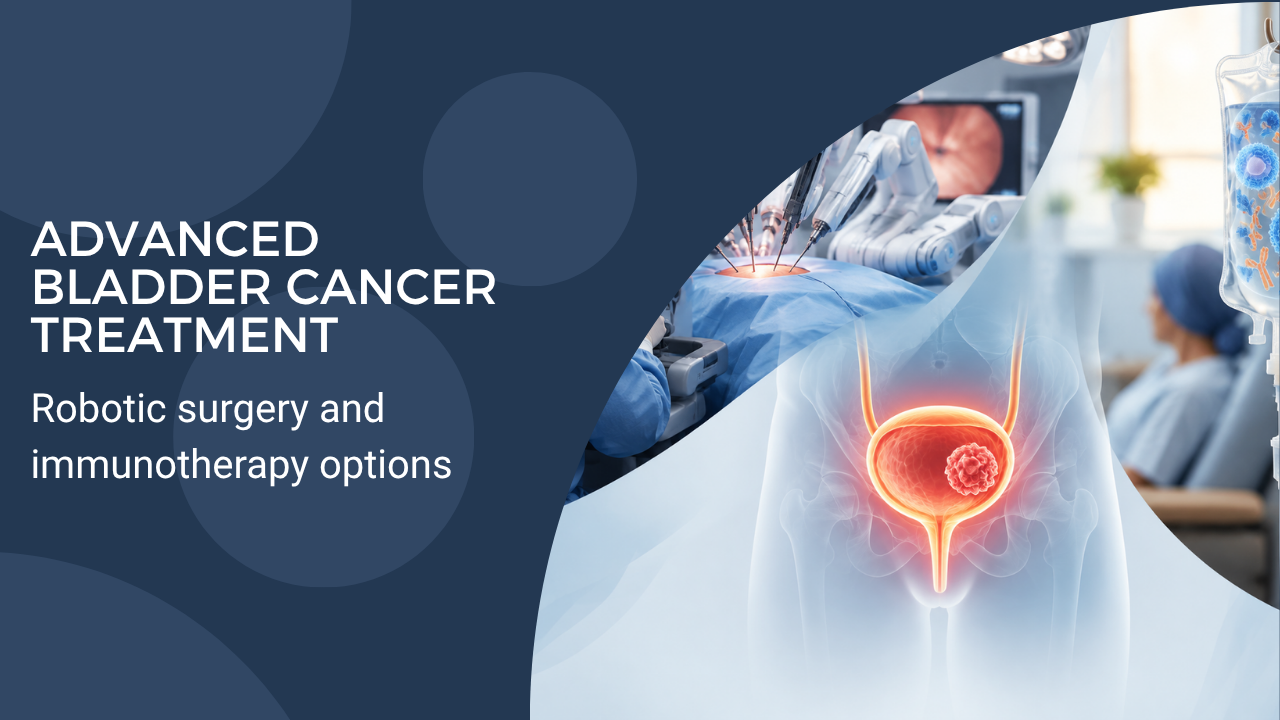
Uro Oncology Robotic Surgery in Mumbai and other metropolitan centres allows surgeons to operate through smaller incisions using magnified three-dimensional vision and highly controlled instruments.
Potential benefits may include:
- Smaller incisions
- Less blood loss
- Less postoperative pain in some patients
- Earlier mobilisation
- Faster recovery in selected patients
There is an important Indian reality to consider: cost.
Robotic surgery usually costs more than conventional open surgery because of robotic equipment, instruments and associated hospital expenses. Published hospital estimates can vary widely, and the final bill depends on the hospital, complexity of surgery, urinary reconstruction, room category and length of stay.
Insurance deserves attention too.
IRDAI rules state that health policies should not exclude medically indicated robotic surgery simply because it is a modern treatment. Yet your policy can still contain limits, co-payments and other conditions.
Get written pre-authorisation from your insurer before surgery whenever possible.
5. Can You Treat Bladder Cancer Without Removing the Bladder?
For selected patients, yes.
Bladder-preserving trimodality therapy combines:
- Maximum safe removal of the tumour through TURBT
- Radiation therapy
- Chemotherapy given with radiation
The aim is to control cancer while keeping a functioning bladder.
This approach is not suitable for every patient with muscle-invasive disease. Tumour size and location, bladder function, kidney function, presence of carcinoma in situ and your ability to complete close follow-up can influence the decision.
Bladder preservation also does not mean treatment ends after radiation.
Regular cystoscopy and imaging remain important because doctors need to watch closely for recurrence.
This is why treatment decisions should ideally involve a uro-oncologist, medical oncologist and radiation oncologist rather than relying on one treatment option alone.
6. Access, Cost and Where You Receive Treatment Matter
Bladder Cancer Treatment in India can look very different depending on where you live and where you receive care.
Government-supported and major trust cancer hospitals can make specialised cancer treatment more affordable, though waiting times and referral pathways may differ.
Private corporate hospitals may provide faster access to robotic surgery, advanced imaging and newer medicines, but treatment costs can be higher.
Patients from smaller cities may need to travel to Mumbai, Delhi, Bengaluru, Chennai, Hyderabad or another large centre for complex robotic surgery or specialised uro-oncology care. Follow-up treatment may sometimes continue closer to home after discussion between medical teams.
An important recent Indian development also came from Tata Memorial Hospital-led research. In 2026, an Indian multicentre study reported that radiation after bladder removal could substantially reduce pelvic recurrence in selected high-risk patients. This is particularly relevant in India because radiation may provide a more affordable treatment strategy than some expensive systemic medicines for appropriate patients.
If you are seeking a second opinion, a consultation with a Uro-Oncologist in Mumbai can help clarify whether you need surgery, bladder preservation, chemotherapy, immunotherapy or combined treatment.
Dr. Varun V. Agarwal evaluates bladder cancer patients based on the stage of disease, overall health and available treatment options, with the goal of developing an individual treatment plan.
FAQs About Bladder Cancer Treatment in India
1. How much does immunotherapy for bladder cancer cost in India?
The cost varies considerably according to the medicine, dose, body weight, hospital and number of cycles. Treatment with newer cancer medicines can reach lakhs of rupees over multiple cycles. Ask the hospital for a written treatment estimate before starting therapy.
2. Does health insurance cover robotic bladder cancer surgery?
Robotic surgery is among the modern treatment methods that health insurance policies should not simply exclude when medically indicated. Your actual reimbursement can still depend on the sum insured, sub-limits, co-payment and policy conditions.
3. Does insurance cover immunotherapy?
IRDAI guidance includes injectable monoclonal-antibody immunotherapy among modern treatment methods that should not be excluded when medically indicated. Your policy terms, approved indication, sum insured and applicable limits still determine how much the insurer pays.
4. Is robotic surgery better than open bladder cancer surgery?
Not for every patient. Robotic surgery may offer benefits such as smaller incisions and reduced blood loss, but cancer control also depends on the tumour stage, surgical technique and surgeon’s experience. Discuss both options before paying a significant premium for robotic treatment.
5. Do I need to travel to Mumbai or another metro for treatment?
Not necessarily. TURBT, chemotherapy and several standard treatments are available across India. Complex robotic cystectomy and some newer systemic therapies may be easier to access at specialised high-volume centres in major cities.
6. Should I get a second opinion before bladder removal?
A second opinion can be valuable before a major procedure such as radical cystectomy. It can help confirm the stage and determine whether bladder preservation, open surgery, robotic surgery or treatment before surgery should be considered.
7. What should I ask my doctor before choosing treatment?
Ask what stage and grade your cancer is, whether the bladder muscle is involved, whether the cancer has spread, what the goal of treatment is, whether bladder preservation is possible and what the total expected treatment cost may be.
Making the Right Treatment Decision
The latest Bladder Cancer Treatment in India gives patients more choices, but more choices can also make decisions harder. TURBT and BCG remain central to early bladder cancer care, while chemotherapy, immunotherapy, bladder-preserving chemoradiation, robotic surgery and newer targeted drug-delivery approaches can help selected patients with more complex disease.
The most expensive or newest treatment is not automatically the best one for you. Your cancer stage, kidney function, overall health, treatment goals, insurance coverage and access to specialist care all matter.
If you are exploring Uro Oncology Robotic Surgery in Mumbai or want to understand whether newer therapies are appropriate, consulting an experienced uro-oncology team can help you compare the options before making a decision. Dr. Varun V. Agarwal can assess the disease stage and discuss a treatment approach based on your individual clinical needs, helping you and your family make a more informed choice.