 by
Introduction
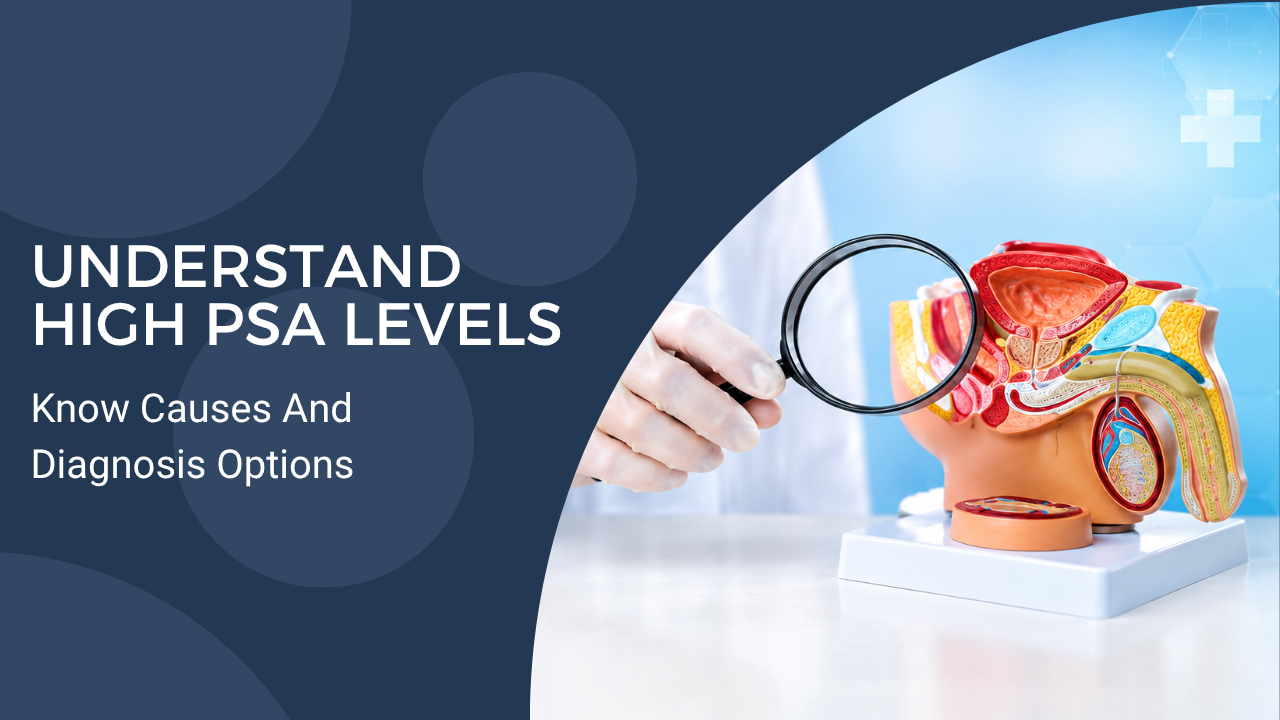
Take a deep breath. You just opened your blood test report, noticed a high PSA number, and your mind immediately jumped to prostate cancer. Before assuming the worst, understand this: a high PSA level does not always mean cancer. PSA or Prostate-Specific Antigen is a marker used to understand prostate health, but several non-cancerous conditions can also increase its level.
A raised PSA requires proper evaluation, not panic. Conditions like prostate enlargement, infection, inflammation, or recent activities can affect the result. This blog explains why PSA levels increase, when prostate cancer is suspected, and what steps you should take next.
What Does a High PSA Level Actually Mean?
PSA is a protein produced by the prostate gland. A small amount of PSA is normally present in the blood. Doctors use the PSA blood test to identify changes in prostate health and decide whether further evaluation is needed.
A high PSA level means that the prostate is releasing more PSA into the bloodstream than expected. But the reason behind this increase can vary.
Think of PSA as a signal, not a diagnosis.
A raised PSA can happen because of:
- Prostate enlargement with age
- Prostate inflammation or infection
- Recent prostate-related procedures
- Prostate cancer
Your doctor will not look at the PSA number alone. Age, symptoms, family history, physical examination, MRI findings, and other reports help create a complete picture.
Common Causes of High PSA Levels Other Than Cancer
Many men feel anxious after seeing an elevated PSA report because they immediately connect it with cancer. But several common prostate conditions can increase PSA.
| Condition | What Happens | Common Signs |
| Benign Prostatic Hyperplasia (BPH) | The prostate naturally enlarges with age and can produce more PSA. | Weak urine flow, frequent urination, waking up at night to pass urine, incomplete bladder emptying |
| Prostatitis | Inflammation or infection of the prostate can increase PSA levels. | Pain while urinating, pelvic discomfort, painful ejaculation, fever in some cases |
| Recent Activities or Procedures | Temporary irritation of the prostate may affect PSA results. | Often no symptoms. Ejaculation, cycling, catheter placement, or prostate procedures may influence levels |
For example, a man may have a high PSA because of prostatitis and not because of cancer. Once the inflammation settles, PSA levels may reduce.
When Does a High PSA Raise Concern About Prostate Cancer?
A high PSA level can be one of the signs of prostate cancer, but it cannot confirm cancer by itself.
Doctors consider several factors before reaching a conclusion.
PSA Level and Its Pattern
A single PSA report provides useful information, but doctors often look at how PSA changes over time.
A gradually increasing PSA level may need closer assessment compared with a stable reading.
Age and Personal Risk Factors
PSA levels naturally change with age. A younger man and an older man with the same PSA value may require different evaluations.
Doctors also consider:
- Family history of prostate cancer
- Previous prostate problems
- Urinary symptoms
- Results of physical examination
A proper assessment helps avoid unnecessary fear and unnecessary procedures.
What Tests Are Done After a High PSA Report?
If your PSA level is elevated, your doctor may recommend additional tests to understand the cause.
Repeat PSA Test
Sometimes, doctors repeat the PSA test after a specific period. This helps check whether the level remains high or was temporarily increased due to another factor.
Digital Rectal Examination (DRE)
A DRE allows the doctor to assess the size and texture of the prostate. It is a quick examination that provides additional information about prostate health.
Prostate MRI
A multiparametric MRI provides detailed images of the prostate. It helps doctors identify areas that may require further evaluation.
Prostate Biopsy
A biopsy may be recommended if the overall assessment suggests a possibility of cancer. During this procedure, small tissue samples are taken from the prostate and examined to identify cancer cells.
A biopsy, not PSA alone, confirms prostate cancer.

Can You Lower PSA Levels Naturally?
Many people search for ways to reduce PSA levels naturally after receiving an abnormal report.
Lifestyle habits such as regular exercise, maintaining a healthy weight, avoiding smoking, and following a balanced diet support overall prostate health.
But these steps cannot replace medical evaluation.
Trying to lower PSA only to improve the report may hide the real reason behind the increase. The goal should not be just reducing the number. The goal should be finding why it increased.
If the cause is an infection, it needs appropriate treatment. If the cause is prostate enlargement, it requires proper management. If cancer is detected, early evaluation helps doctors plan suitable care.
Choosing the Right Specialist for High PSA Evaluation
A high PSA report should be evaluated by an experienced specialist who understands prostate conditions.
A Uro-Oncologist in Mumbai can assess whether your PSA changes are related to cancer risk or another prostate condition.
Specialists like Dr. Varun V. Agarwal focus on diagnosing and managing urological cancers, including prostate cancer. A detailed evaluation helps patients understand their condition and choose the right treatment pathway.
For patients diagnosed with prostate cancer, treatment options depend on factors such as cancer stage, tumour characteristics, overall health, and personal preferences. Advanced approaches, including minimally invasive procedures and Uro Oncology Robotic Surgery in Mumbai, may be considered for suitable patients.
Modern robotic techniques help surgeons perform complex prostate procedures with improved precision and better control.
Frequently Asked Questions
1. Does a high PSA level automatically mean prostate cancer?
No. A high PSA level does not always indicate prostate cancer. Prostate enlargement, inflammation, infection, and other factors can also increase PSA. Doctors use additional tests to determine the actual cause.
2. Can cycling or sexual activity affect my PSA test result?
Yes. Certain activities can temporarily affect PSA levels. Ejaculation and vigorous cycling before the test may influence results in some men. Your doctor may advise precautions before repeating the PSA test.
3. Is a PSA level above 4 dangerous?
A PSA value above 4 ng/mL has traditionally been considered a level that may require further evaluation, but there is no single number that confirms cancer. Age, prostate size, symptoms, and other findings are important.
4. Does a digital rectal examination hurt?
A DRE may feel slightly uncomfortable, but it is usually a quick examination. It helps doctors understand whether there are any changes in the prostate that need further investigation.
5. Do all men with high PSA need a biopsy?
No. A biopsy is not required for every high PSA result. Doctors decide after reviewing repeat PSA tests, MRI findings, examination results, and individual risk factors.
6. Can prostate cancer happen with normal PSA levels?
Yes. PSA is an important test, but it is not the only factor used for diagnosis. Some prostate cancers may occur even when PSA levels are not significantly raised.
Conclusion
A high PSA level can feel alarming, but it does not automatically mean prostate cancer. Several conditions, including prostate enlargement and inflammation, can increase PSA levels. The right approach is to understand the reason behind the increase through proper medical evaluation.
If you have a raised PSA report, consult an experienced urologist or uro-oncology specialist rather than making assumptions. Early assessment helps identify the cause and guides the right treatment plan. With timely diagnosis and appropriate care, prostate health can be managed effectively.