 by
You wake up once, then twice, then maybe three or four times every night to urinate. Your sleep breaks repeatedly, you feel tired the next morning, and you may wonder if this is simply part of getting older.
Frequent urination at night, known as nocturia, is a common symptom in men with an enlarged prostate or Benign Prostatic Hyperplasia (BPH). But it is not something you have to accept without evaluation.
Understanding why it happens, how doctors diagnose it, and what modern treatments are available can help you take the right step for your urinary health.
Why Does an Enlarged Prostate Cause Nightime Urination?
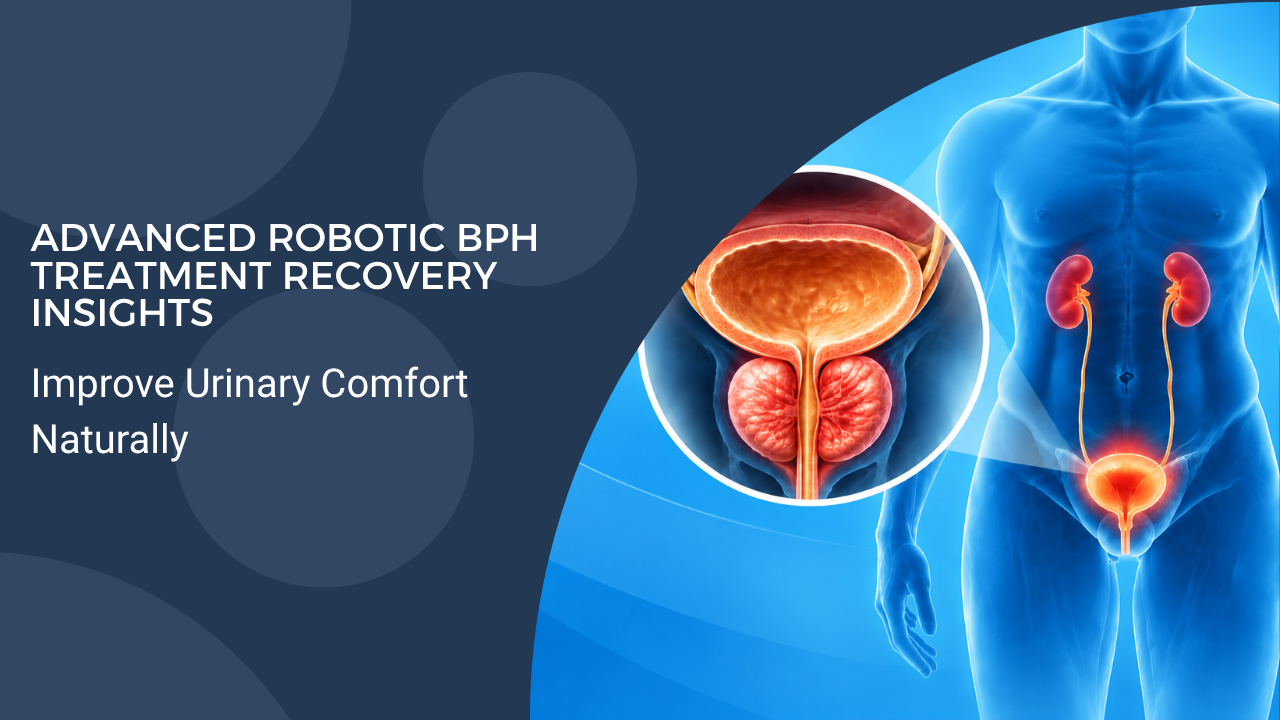
The prostate is a small gland located below the bladder. The urine tube, called the urethra, passes through the prostate before carrying urine out of the body.
As men age, the prostate can gradually grow larger. In BPH, this extra tissue can narrow the space around the urethra.
Think of the urethra like a pipe and the prostate like a ring around that pipe. When the prostate grows, it can squeeze the passage. Your bladder then has to work harder to push urine out.
Over time, the bladder muscle may become thicker and more sensitive. It may start sending the signal to urinate even when the bladder is not completely full.
This can lead to symptoms such as:
- Waking up multiple times at night to urinate
- Weak urine flow
- Waiting for the stream to start
- Feeling that urine is still left after passing urine
- Urgency that makes it difficult to hold urine
Many men delay seeing a doctor because they think these changes are normal with age. But frequent nighttime urination can affect sleep quality, concentration, mood, and daily activities.
Symptoms of BPH: What Men Usually Notice
BPH symptoms are not the same for every person. Some men have a large prostate with mild symptoms, while others may have significant symptoms even with a smaller enlargement.
Instead of remembering medical terms, focus on what you experience.
Stream Problems
You may notice:
- Slow urine flow
- A stream that starts and stops
- Difficulty beginning urination
- Needing to strain to pass urine
Many men describe it as standing at the toilet and waiting longer than before for the urine to start.
Bladder Irritation
These symptoms happen when the bladder becomes more sensitive.
You may experience:
- Frequent urination during the day
- Sudden urge to urinate
- Waking up repeatedly during sleep
After Urination Problems
Some men continue feeling uncomfortable even after using the bathroom.
Common complaints include:
- Dribbling after urination
- Feeling that the bladder has not emptied completely
- Needing to return to the bathroom shortly after urinating
Doctors often use the International Prostate Symptom Score (IPSS) questionnaire to understand symptom severity. It includes seven questions about urinary problems and helps your urologist track how much BPH is affecting your life.
How Doctors Diagnose Enlarged Prostate
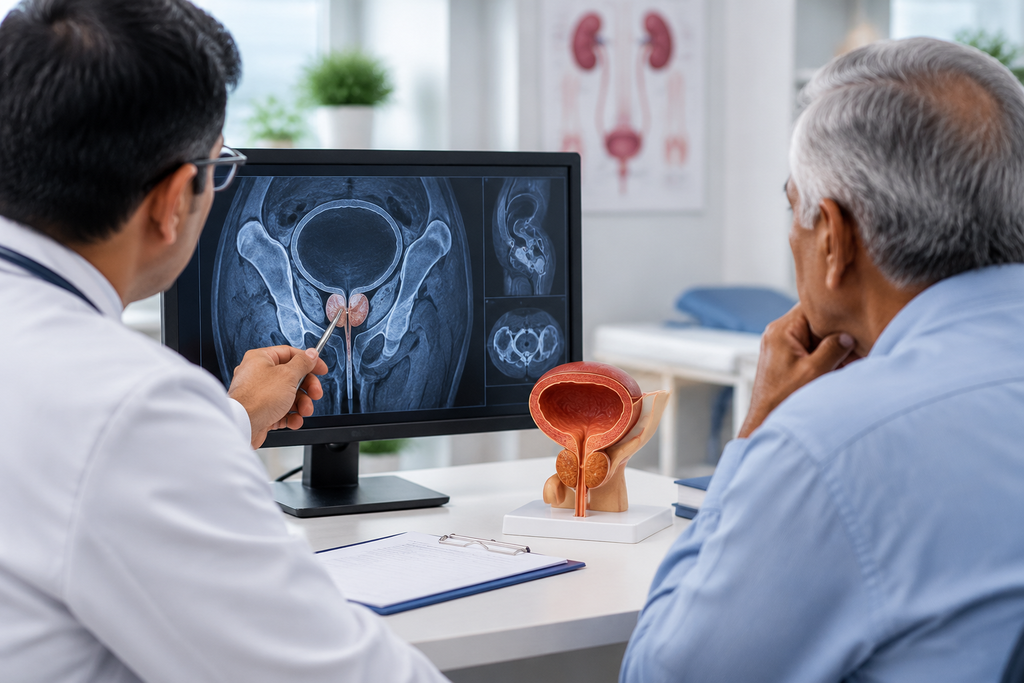
A proper diagnosis helps separate BPH from other conditions that may cause similar urinary symptoms.
Your urologist may recommend:
Medical History and IPSS Assessment
Your doctor will ask about your:
- Nighttime urination frequency
- Urine flow changes
- Urgency symptoms
- Previous medical conditions
- Current medications
Keeping a 48-hour bladder diary can also help. Write down what you drink, when you urinate, and how often you wake up at night.
PSA Blood Test
The Prostate-Specific Antigen (PSA) test is a blood test used to check prostate health. It can provide useful information during evaluation and helps doctors assess whether further investigation is needed.
PSA levels can be affected by different prostate conditions, so results must always be interpreted along with your symptoms and examination findings.
Digital Rectal Examination (DRE)
Many men feel anxious about this examination, but it is a quick test that usually takes only a few seconds.
It allows the doctor to assess prostate size, shape, and firmness.
Ultrasound and Urine Flow Tests
Your doctor may recommend:
- Ultrasound to check prostate size and bladder emptying
- Uroflowmetry to measure urine flow speed
- Residual urine measurement to see how much urine remains after passing urine
These tests help create a personalised treatment plan.
Modern Treatments for BPH: From Medicines to Advanced Procedures
Treatment depends on your symptoms, prostate size, overall health, and how much the condition affects your lifestyle.
Medicines
Medicines are often the first treatment option for men with bothersome symptoms.
Alpha-blockers such as Tamsulosin relax the muscles around the prostate and bladder neck. Many patients notice improvement in urine flow within days.
5-alpha reductase inhibitors such as Finasteride work differently. They reduce the effect of hormones that contribute to prostate growth. These medicines usually take several months to show benefits.
Your doctor will discuss possible side effects, including changes related to sexual function, before starting treatment.
Minimally Invasive Treatments
Some men need a procedure when medicines do not provide enough relief.
Modern options include:
UroLift:
Small implants hold prostate tissue away from the urethra, improving urine flow.
Rezūm:
Water vapor energy is used to reduce excess prostate tissue.
These procedures are designed to relieve blockage while aiming for faster recovery compared with traditional surgery.
Surgical Options
For men with severe blockage, repeated urinary retention, bladder complications, or very large prostate size, surgery may be recommended.
Common procedures include:
TURP:
A surgeon removes obstructing prostate tissue through the urinary passage.
HoLEP:
A laser technique removes prostate tissue and is suitable for many prostate sizes.
GreenLight Laser:
Laser energy is used to remove or vaporise excess prostate tissue.
A urologist selects the procedure based on your prostate size, symptoms, and health needs.
For patients looking for advanced prostate care, consultation with a specialist such as a Uro-Oncologist in Mumbai can help evaluate complex prostate conditions and available treatment options. Dr. Varun V. Agarwal provides consultation in uro-oncology and advanced prostate-related care, including minimally invasive and robotic approaches when appropriate.
Understanding the Link Between BPH and Prostate Cancer
A common question among men is whether an enlarged prostate means they have prostate cancer.
The answer is no.
BPH and prostate cancer are different conditions. An enlarged prostate does not automatically increase your risk of prostate cancer, but both conditions can occur in the same person.
If prostate cancer is suspected, doctors may recommend further tests based on PSA levels, examination findings, imaging, and biopsy results.
Modern approaches such as Prostate Cancer treatment in Mumbai include personalised treatment planning based on cancer stage, patient health, and disease characteristics.
FAQs About Nighttime Urination and Enlarged Prostate
Does waking up every night to urinate mean I have BPH?
Not always. BPH is one possible cause, but diabetes, urinary infections, medications, sleep problems, and increased nighttime urine production can also cause nocturia.
Can BPH medicines affect sexual function?
Some medicines may cause sexual side effects in certain men. Your doctor can discuss the benefits and possible risks before choosing treatment.
When does frequent nighttime urination become a concern?
If you regularly wake up multiple times, lose sleep, feel exhausted during the day, or notice changes in urine flow, it is worth getting evaluated.
Can an enlarged prostate be treated without surgery?
Yes. Many men improve with lifestyle changes and medicines. Minimally invasive treatments are also available for selected patients.
What happens if I suddenly cannot pass urine?
Sudden inability to pass urine is called acute urinary retention. It requires urgent medical attention because the bladder needs immediate drainage.
Is robotic surgery used for prostate conditions?
Robotic technology is mainly used in selected prostate cancer surgeries and other urological procedures. Uro Oncology Robotic Surgery in Mumbai is available for patients who require advanced surgical options after specialist evaluation.
Conclusion
Frequent urination at night is not just a sleep problem. It can be a sign that your prostate or urinary system needs attention. BPH is common, but effective treatments are available, ranging from medicines to advanced procedures.
Do not wait until symptoms start affecting your sleep, work, or daily routine. Track your symptoms, discuss your concerns with a qualified urologist, and get the right evaluation. Early diagnosis can help you choose the most suitable treatment and maintain better urinary health.